

The Power of Visuals in Modern Marketing
In today’s fast-paced digital landscape, visual content plays a pivotal role in effective content marketing and social media strategies. Research reveals that humans process images 60,000 times faster than text, highlighting their ability to leave a lasting emotional impact. This makes visuals indispensable for shaping your brand image and grabbing your audience’s attention.
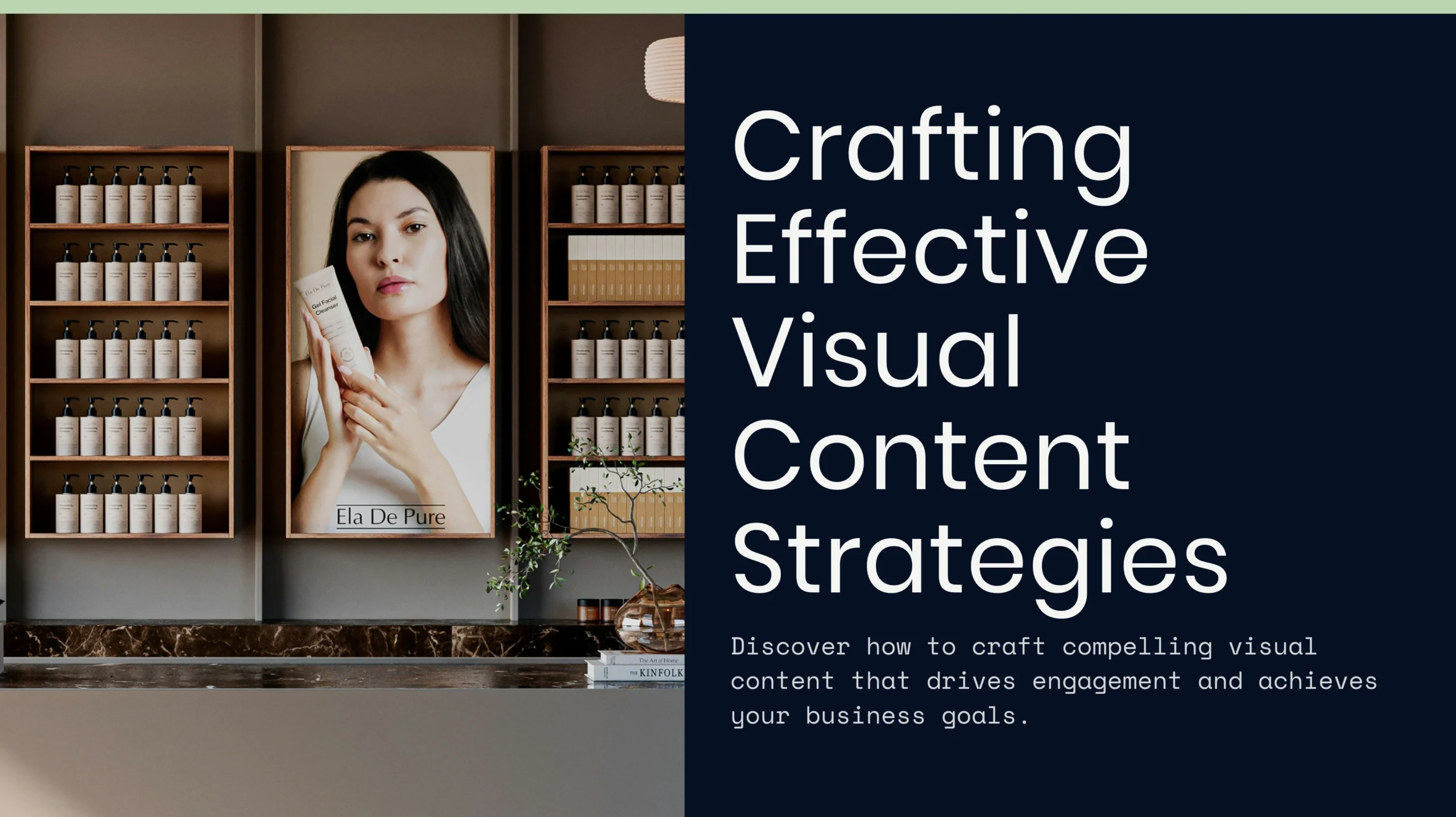
From videos and images to infographics and screenshots, captivating visuals enhance social media engagement and simplify the communication of complex ideas in a memorable way.
Developing an effective visual content strategy involves understanding your audience, aligning visuals with your broader marketing goals, and producing high-quality content tailored for diverse social media platforms. Integrating creative design elements and leveraging varied visual formats allows you to create interactive experiences that reinforce your brand identity and captivate your audience.

This blog post will guide you on building a compelling visual marketing approach to boost engagement, drive conversions, and streamline your content creation process using proven strategies and best practices.
1. Aligning Visual Content with Business Objectives
Creating compelling visual content isn’t just about making things look good—it’s about ensuring every image, video, or infographic you produce works toward achieving your business’s larger goals. When your visual content strategy aligns with your business objectives, you’re not merely posting for activity’s sake; you’re building a focused, results-driven approach that truly moves the needle for your brand.
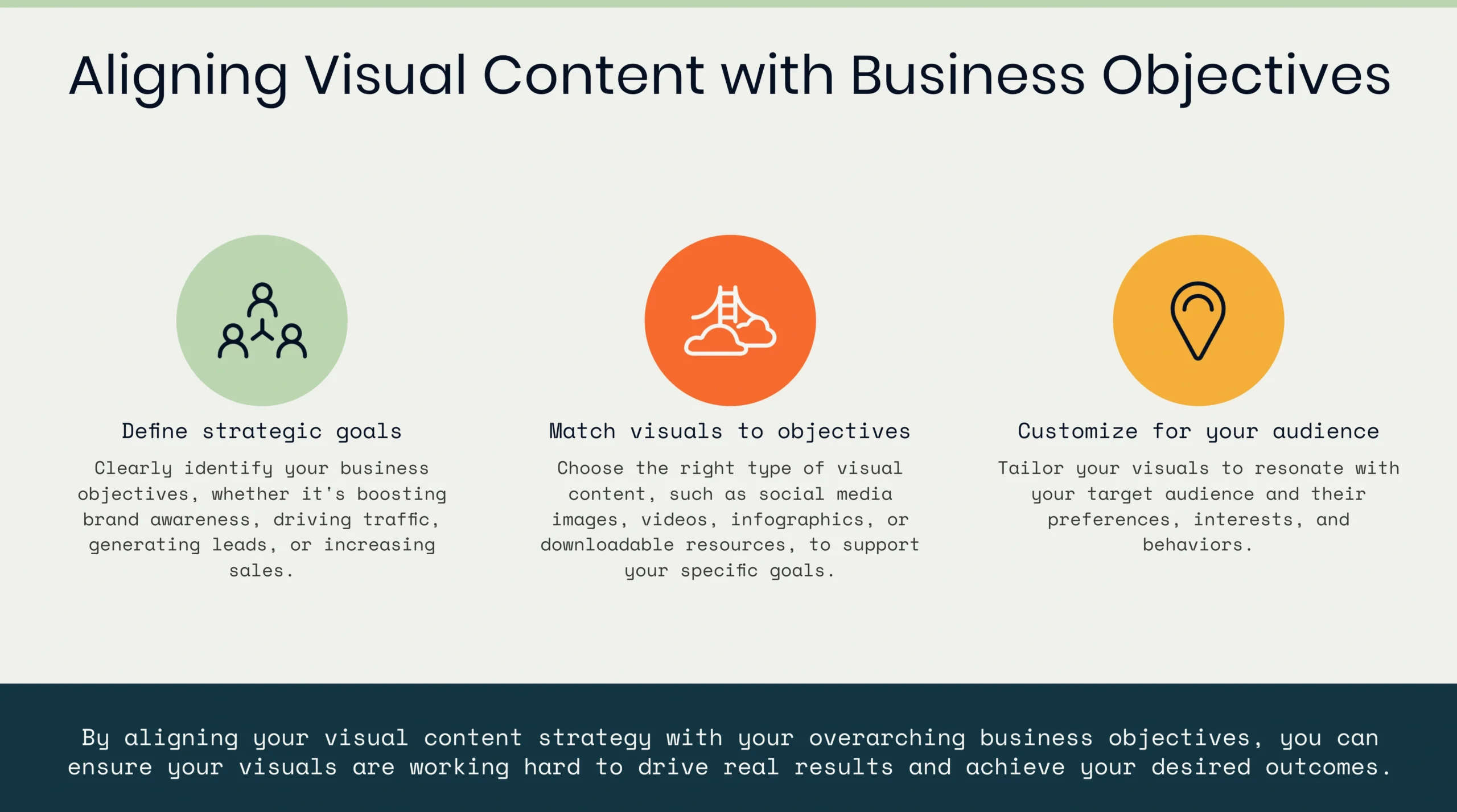
Identifying Strategic Goals
Before diving into design or filming, take a moment to ask: What are you aiming to achieve? Are you looking to boost brand awareness, drive website traffic, generate leads, or increase sales?
Each of these goals demands a tailored approach to visual content creation. For instance, if your objective is to enhance engagement on social media, focus on crafting shareable, interactive content that sparks meaningful conversations.

On the other hand, if your aim is to educate your audience, infographics and explainer videos can be highly effective. By clearly defining your strategic goals, you can customize your visual media to fulfill those objectives, ensuring every piece of content serves a specific purpose.
Types of Visual Content That Serve Different Objectives
There’s no universal solution when it comes to types of visual content. The ideal format depends on your goals and your audience.
For boosting brand awareness, eye-catching images and short, engaging videos on social media platforms can help you reach new audiences. If your focus is on educating or informing, infographics and blog posts supported by visuals can simplify complex information and make it more digestible.
To generate leads, consider producing high-quality downloadable resources such as e-books or whitepapers with strong design elements. Additionally, leveraging user-generated content can foster trust and authenticity with your audience.
By choosing the right type of visual content to align with your business objectives, you can amplify the impact of your marketing campaigns and achieve the results you desire.
2. Implementing Design and UX Principles

Now that you’ve aligned your visual content with your business goals, it’s time to focus on how your visuals look and feel. Great design isn’t just about aesthetics—it’s about creating experiences that are easy to understand, enjoyable to interact with, and memorable for your audience.
By applying proven design and user experience (UX) principles, you can ensure your visual content not only captures attention but also guides users toward the actions you want them to take.

Key Design Principles to Follow
Effective visual content relies on a handful of core design principles that help organize information and make it more digestible. Start with contrast, repetition, alignment, and proximity—often remembered as C-R-A-P. Contrast helps important elements stand out, repetition creates consistency and reinforces your brand, alignment keeps your visuals organized, and proximity groups related items together for clarity.
Don’t forget about balance and hierarchy, which guide the viewer’s eye and make your content easier to scan. When you use these principles, your visuals become more than just pretty pictures—they become powerful tools for communication that support your overall marketing strategy.
User Experience (UX) and Visual Content
User experience is just as important as design when it comes to visual content. Think about how your audience will interact with your images, videos, and infographics.
Is the content easy to navigate? Can users quickly find what they’re looking for? Good UX means making your visuals accessible, intuitive, and enjoyable to engage with.
For example, adding alt text to your images helps people with visual impairments understand your content, while clear calls to action encourage interaction. When you prioritize UX, you create visual content that not only looks great but also delivers a seamless experience across all digital marketing channels.
3. Personalization and Dynamic Engagement

As your audience becomes more accustomed to tailored experiences, generic visuals simply won’t cut it anymore. Personalization is no longer a luxury—it’s an expectation.
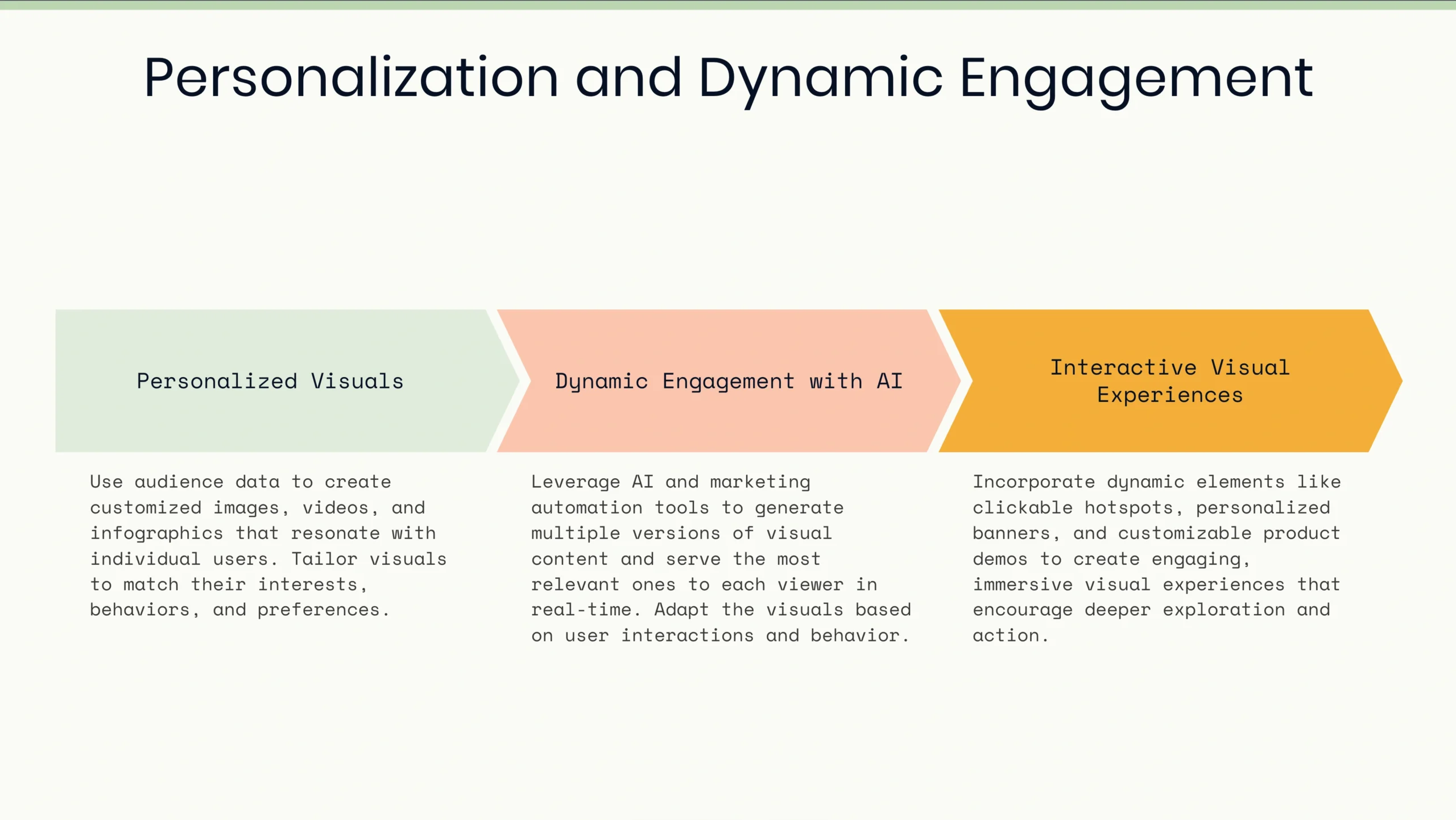
By customizing your visual content to match the interests, behaviors, and preferences of your audience, you create a deeper connection that drives engagement and loyalty. Dynamic engagement, powered by smart technology, allows you to deliver the right visuals to the right people at the right time, making every interaction feel relevant and meaningful.
The Role of Personalization in Visual Content
Personalization transforms your visual content from a one-size-fits-all approach into a targeted, impactful experience. When you use data to tailor images, videos, and infographics to specific audience segments, you’re not just grabbing attention—you’re building trust and relevance. For example, a potential customer who’s shown interest in eco-friendly products might respond better to visuals that highlight sustainability, while another might prefer content that emphasizes innovation or value.
By aligning your visuals with what matters most to each viewer, you increase the chances of conversion and long-term engagement. This is especially true in email marketing and social media, where personalized visuals can make your message stand out in crowded inboxes and feeds.
Using Technology to Create Dynamic Visuals
Thanks to advances in AI and marketing automation, creating dynamic, personalized visuals is easier than ever. Tools now allow you to generate multiple versions of an image or video based on user data, such as location, browsing behavior, or past interactions. For instance, interactive content like clickable hotspots in videos or personalized banners can guide viewers to explore further or take action, making the experience more engaging and relevant.
Platforms like Netflix have mastered this by using algorithms to serve different promotional artwork to different audience segments, ensuring each viewer sees visuals that resonate with their unique interests. By leveraging these technologies, you can scale your personalization efforts and deliver high-quality, dynamic visuals that keep your audience coming back for more.
Conclusion: Measuring Success and Optimizing Your Strategy
Creating effective visual content is just the beginning—measuring its impact is what truly drives results. Track engagement, impressions, clicks, and conversions to understand what resonates with your audience. Use these insights to refine your visual content strategy, focusing on high-quality, personalized visuals that align with your business goals.
Don’t forget to optimize for user experience and leverage technology for dynamic engagement. By consistently analyzing performance and adapting your approach, you’ll build stronger connections, boost engagement, and achieve lasting success in your digital marketing efforts. Start measuring today and watch your strategy evolve.
FAQ
What are the key components of a successful visual content strategy?
Key components of a successful visual content strategy include:
- Clear objectives aligned with business goals
- In-depth audience research to understand preferences
- A consistent brand visual identity, including color palette, typography, and style
- Choosing the right content types, such as images, videos, and infographics
- Creating engaging and relevant content
- Measuring performance to optimize impact
How can I identify the best visual content formats for my target audience?
To identify the best visual content formats for your target audience:
- Analyze their preferences and behaviors
- Test various formats like infographics, videos, photos, and user-generated content
- Use data visuals for clarity, videos for storytelling, and authentic images to build connection
- Adjust strategies based on feedback and performance metrics
Why is audience analysis important when developing a visual content strategy?
Audience analysis is important because it helps tailor visual content to audience preferences, behaviors, and platforms. This ensures:
- Higher engagement
- Stronger brand connection
- Better conversion rates
By understanding your audience, you can create relevant and impactful visuals that resonate and drive desired actions.
How do I measure the effectiveness of my visual content marketing efforts?
To measure effectiveness:
- Track impressions (visibility)
- Monitor clicks and click-through rates (engagement)
- Analyze time spent on visual content (user interest)
- Observe shares (reach and endorsement)
- Measure conversions (desired actions taken)
- Review audience interactions like comments and likes (engagement quality)
Leverage analytics tools to gain valuable insights and calculate ROI for your visual content strategy.

I’m a flexible writer and good at making content. People know me for my interesting stories and social media posts. I interact with a wide range of people on a variety of platforms because I can write stories that are both interesting and thought-provoking. My writing covers a range of genres, and I use emotional depth and incisive observation to make stories and articles that stick with individuals. In addition to writing, I love helping other authors get started and am involved in literary communities through events and seminars. When I’m not writing, I like to spend time outside and find inspiration in daily things.
Leave a Reply